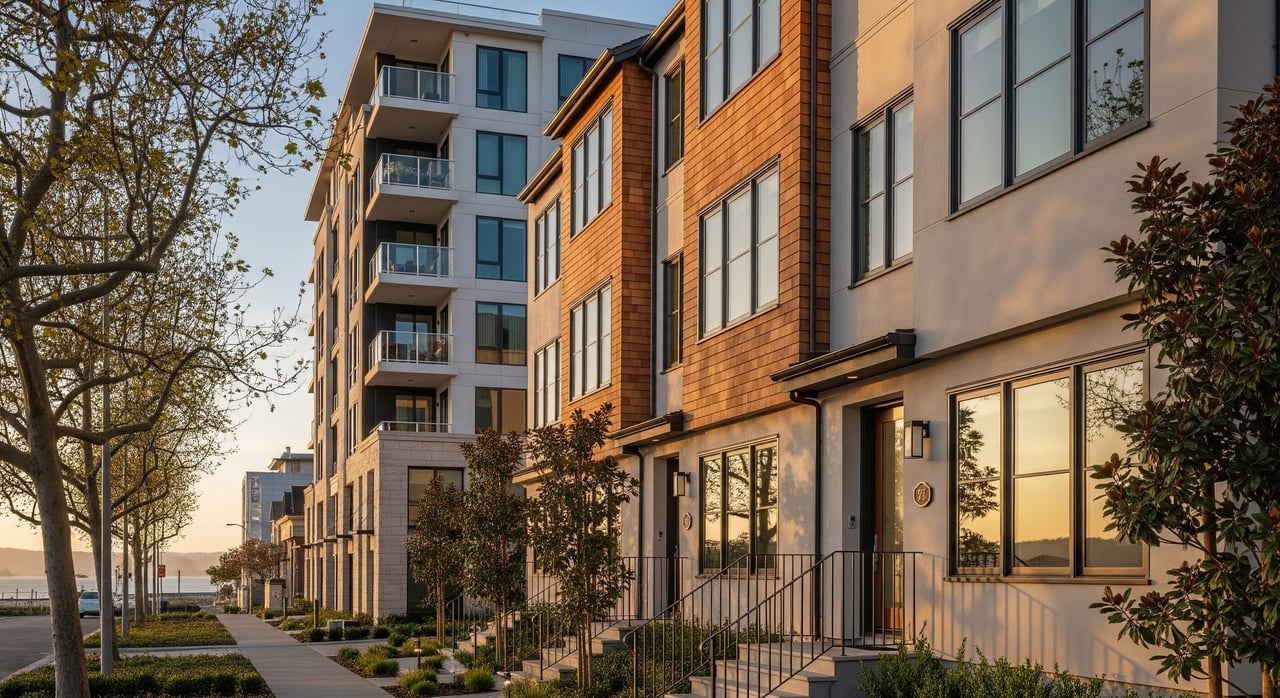
Are you torn between a condo and a townhome in Redwood City? You want the right mix of space, budget, and easy living without headaches. In this guide, you’ll learn how each option works, what to expect from HOAs, how financing and insurance differ, and what to ask at showings so you can choose with confidence. Let’s dive in.
Condo vs townhome basics
What a condo means
A condo gives you ownership of the interior of your unit and a shared interest in common areas like the exterior, land, roof, hallways, and amenities. An HOA manages the building, collects dues, enforces CC&Rs, and maintains shared elements. You often get lower day-to-day maintenance and smaller private space with more shared walls, floors, or ceilings.
What a townhome means
“Townhome” describes the form of housing, not the legal structure. In Redwood City, a townhome can be fee-simple (often called a PUD) where you own the land under the unit, or it can be a condo legally even if it looks like a townhouse. Townhomes tend to offer vertical space, attached garages, and sometimes a small yard or patio, though details vary by complex.
Why legal status matters
Ownership type affects financing, insurance, and maintenance responsibilities. Condo projects may need lender or government approvals for certain loan programs, while many fee-simple townhomes qualify more like single-family homes. In California, common interest communities follow the Davis-Stirling framework, and buyers receive HOA resale packets at purchase so you can see rules, finances, and maintenance obligations.
Redwood City living context
Downtown and transit-oriented pockets of Redwood City tend to feature more condo buildings, often mid-rise with elevators and amenities close to Caltrain and shops. If you value walkability and a “lock and leave” lifestyle, this may fit well. Rental and investor presence can also be higher in these buildings.
Clusters of townhomes are more common outside the core, including areas near Redwood Shores borders, Farm Hill, and neighborhoods adjacent to West Menlo. These communities often provide attached garages, private entries, and small outdoor areas with some HOA support. If you want a house-like feel without taking on everything a detached home requires, this can be a strong match.
HOA, maintenance, privacy, and costs
HOA scope by property type
- Condos commonly include exterior and roof maintenance, elevator and amenity upkeep, landscaping, and a master insurance policy for shared elements. Some utilities may be included for shared systems.
- Townhome HOAs in fee-simple/PUDs often cover landscaping, private street care, and shared amenities. Owners may be responsible for roof, siding, windows, and fences, though some townhome communities handle more. Always confirm in the CC&Rs.
Maintenance and control
Condos reduce your day-to-day upkeep, but you depend more on HOA decisions, including rules and special assessments. Townhomes can mean more owner tasks like exterior painting or roof care, balanced by greater control over your garage, driveway, and outdoor space.
Privacy and noise
Condos typically have more shared boundaries, hallways, and neighbors above or below, which can increase noise risk. Construction quality and building age matter for soundproofing. Townhomes often share only side walls, offer private entries, and include attached garages, which many buyers find more private.
HOA dues and reserves
Monthly dues vary widely based on amenities, building size, and what’s included. Condos with elevators, pools, or extensive common systems often have higher dues. Townhomes with leaner HOAs may have lower dues but shift more maintenance to you. Review the HOA reserve study to gauge whether future assessments are likely.
Insurance to budget
- Condo owners typically carry an HO-6 policy for interior coverage, personal property, liability, and loss assessment. The HOA usually carries the master policy for the exterior and common areas.
- Fee-simple townhome owners often need a full HO-3 homeowners policy covering the structure and improvements, plus personal property and liability. Confirm the HOA master policy to see what is and isn’t included.
Financing check
Lenders scrutinize condo projects for warrantability, owner-occupancy levels, delinquencies, reserves, and litigation. FHA and VA loans may require project approvals. Fee-simple townhomes often qualify more like single-family homes and can be easier for certain loan programs, though you should always check early with your lender.
Quick comparison: condo vs townhome
| Factor | Condo | Townhome |
|---|---|---|
| HOA scope | Broader coverage of exterior, amenities, and common systems | Often lighter coverage; owners handle more exterior items |
| Maintenance | Lower day-to-day owner tasks | More owner responsibility for exterior elements |
| Privacy/noise | More shared walls, floors, and hallways | Fewer shared walls; private entries; attached garages |
| Financing | Project may need approvals and meet lender criteria | Often similar to single-family financing (fee-simple/PUD) |
| Lifestyle fit | Lock-and-leave, walkable, near transit | House-like feel with some HOA support |
Decision rubric: which fits you
Use this quick map to narrow your focus:
- If your priority is lowest maintenance, walkability, and proximity to transit and shops, you likely fit a condo. Caveats: verify soundproofing, HOA financial health, and rental rules.
- If your priority is more space, a private garage, and a small yard or patio, you likely fit a townhome (especially fee-simple/PUD). Caveats: expect some exterior upkeep and potentially a higher price for the added features.
- If your priority is easiest mortgage approval options like FHA/VA and resale flexibility, fee-simple townhomes can be favorable. If considering a condo, confirm project eligibility with your lender.
- If your priority is a lower upfront price and you are comfortable with shared living and HOA governance, condos are often a match. Compare monthly dues and reserves to understand total cost.
- If your priority is privacy and noise reduction, townhomes may edge out condos. Target end units and layouts with fewer shared walls.
Score your needs across maintenance tolerance, privacy, commute/walkability, and budget. Then compare real monthly costs and likely long-term expenses across both property types.
What to ask at showings
HOA and governance
- Request the full HOA resale packet: CC&Rs, bylaws, rules, recent meeting minutes, budget, financials, reserve study, and insurance master policy summary.
- Ask about planned capital projects, any special assessments, delinquency rates, rental restrictions, short-term rental rules, pet policies, and active or threatened litigation.
Physical condition and responsibilities
- Clarify who maintains the roof, exterior paint/siding, windows, decks, fences, gutters, garage doors, and driveways.
- Ask about the date of last major work (roof, seismic retrofits, re-piping) and the age/type of key systems (HVAC, water heater, plumbing, electrical panel).
- Look for signs of water intrusion, mold, or pest issues and ask about past repairs or claims.
Noise, privacy, and layout
- Confirm how many shared walls a unit has and whether there are neighbors above or below.
- Note flooring type and soundproofing details.
- Check balcony or patio exposure and how private it feels.
Parking, storage, and amenities
- Verify assigned parking, guest parking, and EV charging availability and rules.
- Ask about storage units or in-garage storage options.
- Review amenity access, hours, and any related restrictions.
Utilities and costs
- Confirm which utilities are included in HOA dues and which are separate.
- Request average utility bills if available.
Resale and financing
- Ask for owner-occupancy rates and investor concentration.
- Confirm any FHA/VA or other project approvals if relevant to your financing.
- Review recent comparable sales within the building or complex.
Neighborhood and lifestyle
- Consider walkability, proximity to Caltrain, commute routes to major employers, grocery and healthcare access, and local services.
- Check trash and street cleaning schedules and any nearby noise sources.
- Visit at different times of day to experience traffic and ambient noise.
Financing, insurance, and taxes in brief
- Mortgage: If you need FHA/VA or certain conventional loans, verify a condo project’s eligibility early. Lenders review HOA reserves, delinquencies, litigation, and owner-occupancy levels.
- Insurance: Condo buyers typically need an HO-6 policy with loss assessment coverage. Fee-simple townhome buyers often need an HO-3 policy. Confirm HOA and owner responsibilities.
- Taxes: Property taxes follow Proposition 13 rules in San Mateo County. Review parcel-specific assessments and any Mello-Roos. HOA dues are ongoing costs and can factor into certain lenders’ debt-to-income calculations.
Next steps in Redwood City
- Define your top priorities and must-haves across space, privacy, maintenance, and commute.
- Shortlist both condos and townhomes in your target areas to compare real monthly costs, HOA scope, and noise/privacy in person.
- Review the HOA packet in detail, including reserve funding and planned projects.
- Speak with your lender early about project eligibility and financing options.
- Check county property records for parcel taxes and any special assessments, and verify building permit histories for major work.
If you want a local, high-touch guide to help you compare options, review HOA documents, and align your budget with the right neighborhoods, reach out to Stacey Davis. Schedule your free consultation and get a plan that fits your goals.
FAQs
What is typically cheaper up front in Redwood City, a condo or a townhome?
- Condos often have a lower entry price than townhomes, but you should compare monthly HOA dues and reserve strength to understand total cost.
How much should I budget each month for HOA dues and utilities?
- Dues vary by building amenities and what is included. Ask the HOA what utilities are covered, request average bills, and review the reserve study for potential future assessments.
Can I use FHA or VA financing for a condo in Redwood City?
- It depends on the project’s approval status and lender criteria. Confirm early with your lender and verify any condo project approvals.
What does the HOA usually cover for a townhome vs a condo?
- Condo HOAs often cover exterior, roof, amenities, and common systems. Townhome HOAs may focus on landscaping and shared areas, with owners handling more exterior items. Always verify in the CC&Rs.
How do special assessments work and who pays for big repairs?
- Special assessments can be levied by the HOA for major repairs when reserves are not sufficient. Review meeting minutes and the reserve study to see what projects are planned and how costs are allocated.