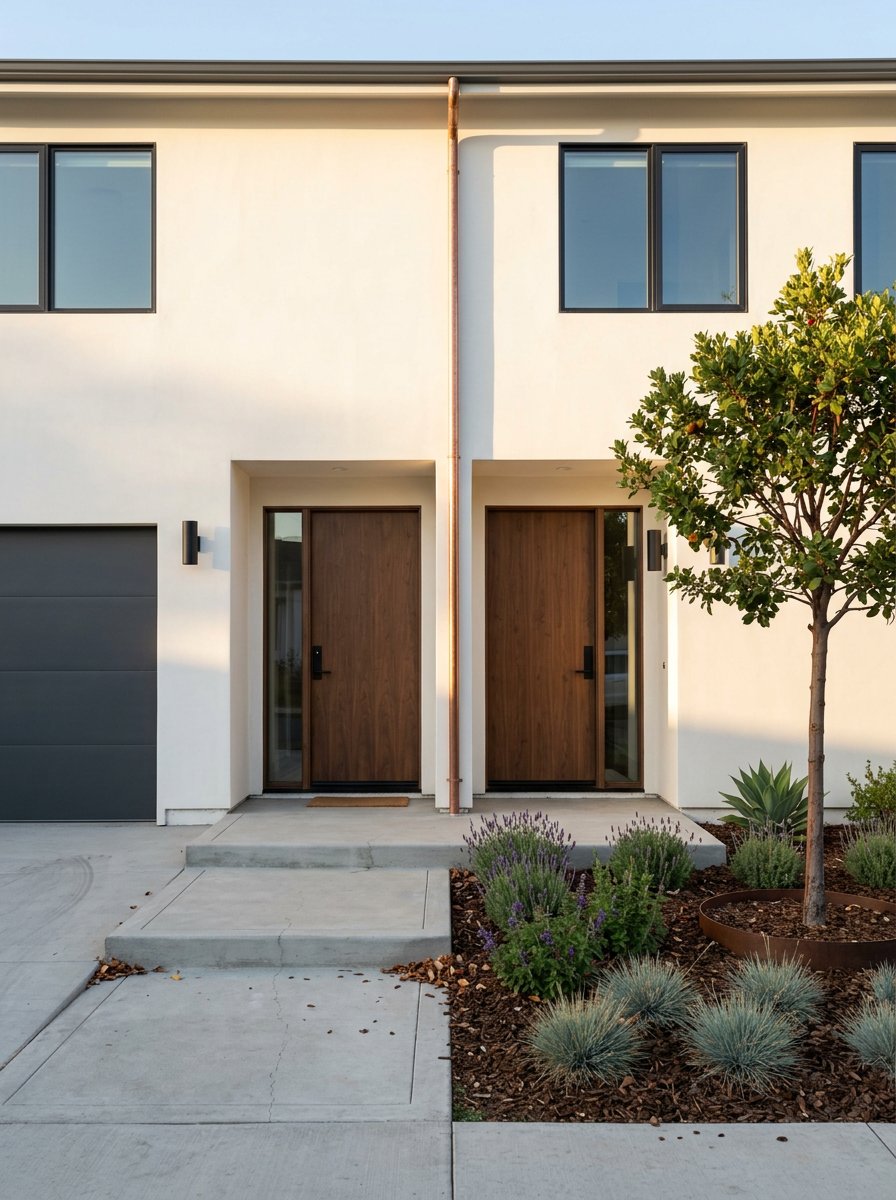
Trying to decide between a Hayward townhome and a single-family house? You want the right fit for your budget, commute, and long-term plans, without surprises after you move in. In this guide, you’ll see how prices, monthly costs, financing rules, and resale factors compare in Hayward so you can choose with confidence. Let’s dive in.
Quick comparison: townhome vs house
- Price entry: Townhomes and condos are often several hundred thousand dollars less than detached homes in Hayward. In February 2026, the attached segment’s median was about $567,500, per the local MLS report. Detached homes typically sell much higher citywide.
- Monthly costs: Townhomes add HOA dues that often cover exterior upkeep. Houses avoid HOA dues but put you on the hook for roof, exterior, yard, and big-ticket items.
- Financing: Condos and many townhomes are evaluated at the project level for eligibility. If a project is not eligible, some loans may require different terms or larger down payments.
- Insurance: Townhomes/condos usually use an HOA master policy plus your HO-6 policy. Houses use an HO-3 homeowners policy.
- Resale: Detached homes often draw a wider buyer pool. Condo and townhome resale depends more on project health, HOA rules, and financing eligibility.
Current Hayward pricing snapshot
- According to the Bay East MLS segment report, Hayward condominiums and townhomes had a $567,500 median sale price in February 2026, with an average of about $463 per sq ft and roughly 50 days on market, and buyers paid close to 99 percent of list price on average. You can view the report in the Hayward Condominiums & Townhomes update.
- For citywide context across all home types, Hayward’s median sale price was about $840,000 in January 2026 based on MLS-fed aggregator data. Methodologies vary by provider, so expect a range. The key takeaway is that attached homes remain a lower-priced entry point in early 2026.
Ownership and financing basics
Legal form matters
“Townhome” describes how a home looks, not the legal form. In Hayward you may see:
- Condominiums or common-interest developments (CIDs): You own the unit’s interior with shared common areas under an HOA.
- Planned unit developments (PUDs): You own a lot and structure fee simple, usually with a lighter HOA.
- Fee-simple townhouses: You own the structure and land, sometimes with no HOA or a minimal one.
Financing can hinge on the project’s eligibility. Conventional lenders review condominium projects against agency guidelines. Learn more about project eligibility in Fannie Mae’s resources.
FHA and VA considerations
FHA and VA loans can work for condos and townhomes, but the project typically needs to meet agency approval or single-unit review standards. If you plan to use FHA financing, check the project’s status early using HUD’s guidance on FHA condo project approval requirements. Early confirmation protects your timeline and avoids last-minute surprises.
HOA dues and what they cover
Hayward townhome HOA dues commonly appear in the roughly $230 to $425 per month range on recent listings. Some newer or amenity-rich communities can be higher, occasionally around the mid-$500s. What those dues cover varies by project, but often includes exterior maintenance and roofing, common-area landscaping, amenities, management, and master insurance. California’s Davis–Stirling framework generally makes the association responsible for common areas unless CC&Rs say otherwise. See a plain-English overview of responsibilities on Davis–Stirling’s site.
Coverage under the HOA’s master policy can be “bare walls,” “walls-in,” or more comprehensive. Your unit policy (HO-6) fills in the gaps and often includes loss-assessment coverage in case the HOA issues an assessment tied to a claim. For a helpful primer on condo insurance basics, review this HO-6 overview.
What to request in the HOA packet
- CC&Rs, bylaws, rules, and any rental caps or short-term rental rules
- Current operating budget and reserve study
- Master insurance declarations and deductible details
- Recent board minutes and notice of any planned projects or special assessments
- Status of any litigation or large insurance claims
Monthly cost math: where it differs
Your total monthly cost typically includes mortgage, property tax, insurance, utilities, and either HOA dues or a maintenance reserve.
- Townhome example: Start with mortgage + property tax + HO-6 insurance + utilities + HOA dues. Many Hayward HOAs fall around the mid-$300s per month, which often replaces exterior maintenance and roofing from your personal budget.
- Single-family example: Start with mortgage + property tax + HO-3 insurance + utilities + maintenance reserve. A common baseline is to budget about 1 percent of home value per year for upkeep on a house, which can vary with age and condition. See the 1 percent rule explained in this maintenance cost guide.
For taxes, Alameda County properties are generally assessed under Prop 13, which means about a 1 percent base rate plus local assessments. Always confirm the parcel’s details and current bill with the county and your lender. You can review general assessment information on the Alameda County Assessor site.
Insurance differences to plan for
- Townhome/condo: HOA master policy plus an HO-6 unit-owner policy. Verify whether the master is “bare walls” or “walls-in,” and consider a loss-assessment rider to help cover your share of a large HOA deductible or claim. See the HO-6 coverage summary.
- Detached house: HO-3 homeowners policy tailored to the property. In the Bay Area, discuss earthquake and flood coverage options with your agent.
Resale and liquidity: what affects your exit
Detached single-family homes tend to attract a broader pool of buyers, including those prioritizing yards or future ADU potential. Townhomes and condos often appeal to first-time buyers and downsizers but can face buyer-pool limits if a project is not eligible for certain loan programs. Lenders evaluate condo projects against agency standards, which can impact marketability. You can see how project eligibility works in Fannie Mae’s resources.
Red flags that can slow resale or reduce value include: low reserves relative to building age, active litigation, high master-policy deductibles, frequent special assessments, or a high renter ratio that can affect lending. Investigate these items during your contingency period.
Hayward-specific due diligence
- Seismic and soil: Hayward sits near the Hayward Fault. Review local hazard disclosures and consult USGS resources for fault and liquefaction context using the USGS geonarrative tools.
- Taxes and special districts: Some newer communities may include special taxes that appear on the property tax bill and affect your monthly payment. Verify your parcel’s bill and any special lines with your lender and the county.
- Transit and neighborhood fit: Consider proximity to BART, Cal State East Bay, and commute routes. Walk through the community at different times to gauge noise, parking, and everyday convenience.
Buyer checklist: townhome vs single-family in Hayward
- Compare medians: attached segment around $567,500 in February 2026 per Bay East MLS; citywide sales median is materially higher across home types.
- Confirm legal form: is it a condo/CID or a fee-simple PUD? Financing and insurance needs change by legal structure.
- Ask your lender early about condo project eligibility and loan options. Start with Fannie Mae’s project guidance and FHA’s condo approval overview if relevant.
- Request the full HOA resale packet: CC&Rs, budget, reserve study, master insurance declarations, minutes, and any assessment history. Use Davis–Stirling’s guide for responsibility basics.
- Build a clear monthly budget: mortgage + property tax (about a 1 percent base rate plus local assessments) + insurance + utilities + HOA dues for townhomes or a maintenance reserve for houses. See Alameda County’s assessment overview.
- Align insurance: HO-6 for condos/townhomes with loss-assessment coverage as needed; HO-3 for houses. Review HO-6 basics.
- Inspect with Hayward in mind: evaluate seismic retrofits, roof/structure condition, drainage, and any HOA-planned projects.
Ready to compare specific homes, run real numbers, and review HOA documents side by side? Reach out to Stacey Davis to get a tailored list and a clear, apples-to-apples cost breakdown for your shortlist.
FAQs
What are typical HOA dues for Hayward townhomes, and what do they cover?
- Many Hayward townhome HOAs fall roughly in the $230 to $425 per month range, sometimes higher for amenity-rich or newer communities, and they often cover exterior maintenance, roofing, common-area landscaping, amenities, management, and a master insurance policy.
Can I use FHA financing to buy a Hayward condo or townhome?
- Yes, FHA can work if the project meets FHA approval or single-unit review standards; confirm the project’s status early using HUD’s condo approval requirements and your lender’s guidance.
How do monthly costs differ between a townhome and a single-family house?
- Townhomes add HOA dues that replace many exterior costs, while houses avoid dues but require a maintenance reserve; a common baseline for houses is about 1 percent of home value per year, as explained in this maintenance cost guide.
What insurance do I need for a townhome versus a house in the Bay Area?
- Townhome and condo owners typically carry an HO-6 policy that complements the HOA’s master policy and may include loss-assessment coverage, while detached homes use an HO-3 policy and should consider earthquake and flood options with an agent.
What HOA red flags could hurt resale for a Hayward condo or townhome?
- Low reserves, active litigation, frequent special assessments, high master-policy deductibles, and project characteristics that limit loan eligibility can narrow the buyer pool and affect days on market.