Dreaming of a walkable downtown, easy Bay Trail access, and a relaxed Peninsula pace? If Menlo Park is on your shortlist, you’re likely weighing parks, dining, and commute convenience. This guide walks you through what daily life looks like here so you can decide if it fits your routine and priorities. Let’s dive in.
Menlo Park at a glance
Menlo Park sits between Palo Alto and Redwood City on the San Francisco Peninsula, with quick access to US 101, I 280, and the downtown Caltrain station. You’ll feel a blend of small-town main street and Bay Area professional energy. The city mixes lively commercial areas with quieter residential streets, which lets you choose between walkability and more space. Prices are generally higher than many markets, so planning and prioritizing is key.
Parks and open space highlights
Menlo Park’s outdoor scene shapes everyday life. You’ll find shoreline trails, community fields, and pocket parks that make quick workouts and relaxed weekends easy.
Bedwell Bayfront Park
This Bayfront gem offers wide, mostly flat trails with salt‑marsh views and access to the Bay Trail. You’ll see walkers, cyclists, birdwatchers, and kite flyers, especially at sunset. If you like daily exercise or a scenic commute by bike, this park can change your routine for the better.
Burgess Park and Recreation Center
Burgess Park is the city’s community hub, with sports fields, courts, playgrounds, and a public pool. It’s a go-to spot for youth programs, adult leagues, and swim classes. If you value structured activities and community programming, you’ll likely spend time here.
Neighborhood parks and pocket greens
Neighborhood spots like Nealon Park and Fremont Park offer playgrounds and small green spaces for quick breaks, dog walks, or a relaxed coffee outside. These pocket parks help define the feel of each residential area and keep daily errands close to fresh air.
Bay Trail access
The Bay Trail and nearby levee paths give you long, flat routes for running and biking. Shoreline habitats add a calm, natural backdrop and are often used for informal nature learning. It’s a practical way to keep your fitness goals on track without a long drive.
Allied Arts Guild gardens
The historic Allied Arts Guild features gardens and small shops, functioning as a quiet cultural touchpoint. It’s a pleasant place to stroll, meet a friend, or attend occasional events.
Dining and downtown scene
You’ll notice contrasts in pace and style across Menlo Park’s dining areas. Downtown feels intimate and walkable, while major corridors favor quick convenience.
Santa Cruz Avenue downtown
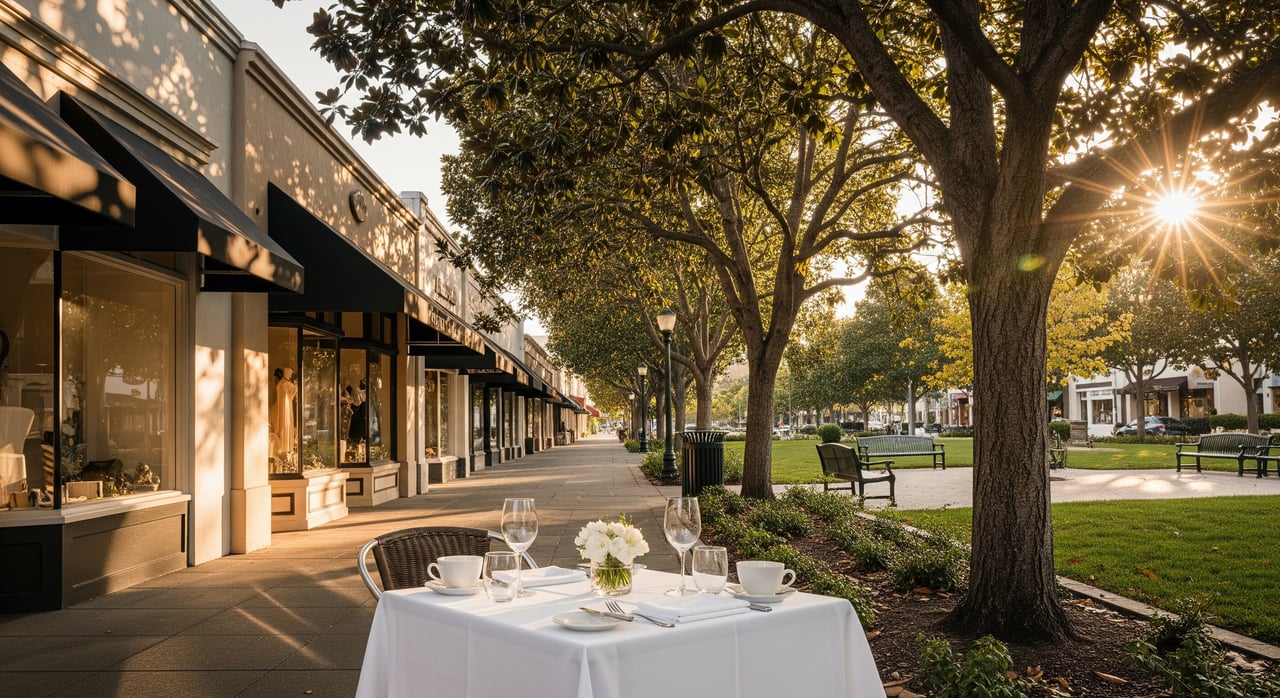
Santa Cruz Avenue is the heart of downtown Menlo Park. It’s tree‑lined and pedestrian‑oriented, with boutique shops, cafés, wine bars, and sit‑down restaurants. The nearby Caltrain station brings a weekday lunch crowd, while weekends lean into café culture and relaxed dinners.
El Camino Real and Willow Road
These corridors are more car‑oriented. You’ll find a practical mix of national chains, casual spots, grocery stores, and services for quick errands. It’s a reliable choice when you need something fast or want easy parking.
Neighborhood dining nodes
Smaller clusters in areas like Sharon Heights and Belle Haven offer everyday convenience dining and markets close to home. If you prefer staying local on weeknights, these pockets matter.
Events and seasonal energy
Farmers’ markets and seasonal events animate downtown and local parks at various times of year. Calendars change, so check community listings when planning your weekend.
Daily rhythms and convenience
Menlo Park’s routine follows a predictable, comfortable cadence that’s easy to settle into.
Mornings
You’ll see commuters heading to 101, 280, and Caltrain, plus runners and dog walkers in the neighborhoods and along the Bayfront. School drop-offs are part of the normal rhythm.
Midday
Downtown cafés and restaurants draw a lunch crowd, while El Camino and Willow handle quick errands. It’s a good window for park time if you work from home.
Evenings and weekends
Expect youth sports, pool time, and relaxed family activities in parks and recreation spaces. Downtown is lively yet low-key, with a comfortable pace for dinner and a stroll.
Walkability and parking
Downtown is generally pedestrian friendly. Parking can vary by block and time of day, so pay attention to posted limits. Residential areas near commercial zones see more street activity than farther-flung neighborhoods.
Neighborhood snapshots
These profiles can help you match your lifestyle with the right pocket of Menlo Park.
Downtown and Central Menlo Park
- Best for: Walkable access to cafés, restaurants, shops, and Caltrain. Ideal if you want a lively, central base.
- Housing: Older bungalows, some multifamily, and smaller lots. Inventory can be limited.
Sharon Heights and Sharon Park
- Best for: Larger lots, quieter streets, and a more residential feel near green spaces.
- Housing: Mid‑century and newer single‑family homes on larger lots.
Belle Haven and West Menlo Park
- Best for: Buyers seeking relatively more budget‑friendly options for the Peninsula, with quick access to major corridors and employment areas.
- Housing: A mix of single‑family homes and multifamily residences, with ongoing neighborhood improvements in some areas.
Menlo Oaks and Allied Arts area
- Best for: A strong residential setting with convenient trips to downtown and the Bayfront.
- Housing: Traditional single‑family homes, often with mature landscaping.
What to weigh when deciding
- Commute mode: If you’ll use Caltrain, living closer to downtown helps. If you drive, proximity to 101 or 280 can save time.
- Schools and childcare: Public and private schools are a key factor for many families. Review district boundaries and enrollment policies early.
- Lifestyle priorities: Decide if walkability to cafés and shops or a larger yard and quieter streets matters more. On the Peninsula, lot sizes and home styles vary street by street.
A simple shortlisting plan
- Pick two top priorities, such as “walkable downtown + transit” or “larger lot + quieter streets.”
- Use those to focus: central Menlo Park for walkability; Sharon Heights for yard space; Belle Haven or West Menlo Park for relative value.
- Visit at different times: Try weekday morning, midday, and a weekend afternoon to compare traffic, parking, and park use.
If you plan to sell
Lean into what buyers want here: proximity to parks and trails, downtown access, and smooth commute options. Clear presentation, strong photos, and simple neighborhood maps help buyers visualize daily life. If you’re moving within the Bay Area or relocating, coordinated timing and preparation can protect your bottom line and reduce stress.
Ready to explore homes, compare neighborhoods, or plan a sale in Menlo Park? Connect with Stacey Davis for local guidance and a clear, step‑by‑step plan.
FAQs
How walkable is downtown Menlo Park?
- Downtown around Santa Cruz Avenue is highly walkable, while residential pockets farther out are more car‑dependent.
Where can you exercise outdoors in Menlo Park?
- Bedwell Bayfront Park, the Bay Trail, and neighborhood parks offer flat paths, fields, and playgrounds for walking, running, biking, and casual workouts.
What is the dining scene like in Menlo Park?
- Expect a mix of independent cafés, bistros, and higher‑end restaurants downtown, plus convenient chain and casual spots along El Camino Real and Willow Road.
How is parking near downtown Menlo Park shops?
- Parking availability varies by block and time of day; plan for peak periods and watch posted limits to avoid tickets.
What are typical commute options from Menlo Park?
- Many residents use Caltrain for San Francisco and San Jose trips, while drivers rely on US 101 and I 280; travel times vary by hour.
Which neighborhoods fit different lifestyles in Menlo Park?
- Choose central Menlo Park for walkability, Sharon Heights for larger lots and quieter streets, Belle Haven/West Menlo Park for relative value, and Menlo Oaks/Allied Arts for a strong residential feel.